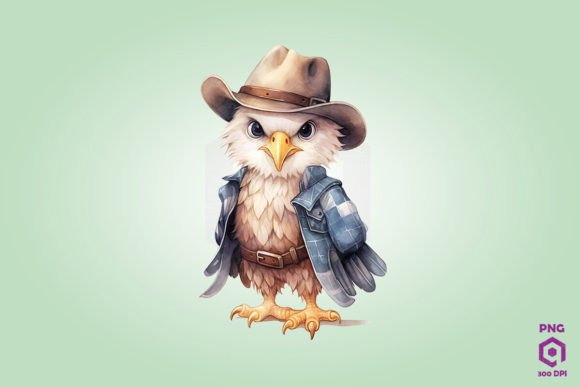
Bald Eagle Wearing a Cowboy Hat Embroidery Review
When I scroll through new Illustrations and Graphics for my embroidery library, I am usually looking for one thing: viability. Can this actually be stitched? Will it hold up in the wash? Does it have enough personality to justify the time it takes to set up the machine? Recently, I came across the Bald Eagle Wearing a Cowboy Hat clipart PNG, and it immediately caught my eye. It is not just another generic animal print; it has a distinct narrative that screams "custom gift" or "statement piece."
As an experienced designer who tests designs on everything from delicate baby bodysuits to heavy-duty workwear, I wanted to put this design through its paces mentally before committing it to fabric. Here is my practical breakdown of how the Bald Eagle Wearing a Cowboy Hat performs in real-world applications, where it shines, and where you need to be careful.
The First Impression: Personality and Layout
The first thing you notice about the Bald Eagle Wearing a Cowboy Hat is the mood. It strikes a balance between patriotic pride and rustic charm. For designers, this dual appeal is gold. It allows you to target two very different customer bases with the same asset: those looking for American-themed decor and those who love western or cowboy aesthetics.
From a layout perspective, the composition feels balanced. The eagle’s posture suggests strength, while the hat adds a touch of whimsy. This contrast is crucial for embroidery project success because flat, static images often look boring when stitched. The visual weight of the hat anchors the design, preventing the eagle’s head from feeling too dominant. When I look at this as a potential machine embroidery design, I see a design that invites conversation. It is not subtle, but it does not need to be. It is meant to be seen.
Real-World Use Cases: Where This Design Fits Best
I do not believe in using a sledgehammer to crack a nut, and I certainly do not believe in putting every design on every product. The Bald Eagle Wearing a Cowboy Hat has specific niches where it will outperform other assets. Based on my experience with Etsy seller trends and boutique branding, here are the best fits:
- Custom Apparel and Sweatshirts: This design works exceptionally well on crewneck sweatshirts or denim jackets. The ruggedness of denim complements the cowboy theme perfectly. It feels authentic rather than forced.
- Tote Bag Designs: A sturdy canvas tote bag is a classic vehicle for bold graphics. Placing the eagle on the front pocket or center chest creates a focal point that looks professional and finished.
- Holiday Embroidery and Gifts: With Independence Day and Memorial Day approaching, or even during fall harvest themes, this design hits the right emotional notes. It makes for a memorable personalized gift for veterans, ranchers, or outdoor enthusiasts.
- Embroidered Patches: If you are selling patches for backpacks or jean vests, this design translates beautifully. The strong outlines of the eagle and hat create clean edges that look sharp when cut out and backed.
- Kitchen Towels and Aprons: For the home cook with a rustic kitchen, a tea towel featuring this eagle adds character. It is a great way to add value to a simple linen blend fabric.
However, it is less suited for delicate items like fine silk scarves or intricate lace dresses. The bold nature of the design would overwhelm such fabrics.
Technical Considerations for Stitching Clarity
This is where the rubber meets the road. Even the best-looking graphic can fail if the digitization (or conversion) is poor. When evaluating the Bald Eagle Wearing a Cowboy Hat, several technical factors come into play.
Stitch Density and Detail: Eagles have feathers, which can be tricky to stitch without creating a muddy mess. If the design relies heavily on tiny running stitch details for feather texture, it may not render well on smaller hoop sizes. You want to ensure there is enough fill stitch area to give the body substance, while keeping the hat’s brim defined by a crisp satin stitch. If the detail is too fine, it might disappear on textured fabrics.
Fabric Texture and Contrast: Thread color contrast is non-negotiable. On a dark fabric, the white head of the eagle must pop. If you are stitching on a heathered gray or a textured chambray, the background noise might interfere with the finer lines of the hat. I always advise testing on scrap fabric first. Check whether the thread colors you plan to use provide enough separation between the eagle’s beak, eyes, and the hat’s band.
Hoop Size Limitations: If you are attempting this on a small hoop, such as 4x4 inches, you need to be cautious. Small hoops often require simplifying complex designs. If the original digital embroidery file is dense, reducing it might cause the hat’s details to blur together. Conversely, if you are working on a large hooped item like a blanket or a large pillow cover, the design will likely shine, allowing the viewer to appreciate the nuance of the illustration.
Where to Be Careful
There are certain scenarios where this design requires extra caution:
- Stretchy Fabrics: Avoid placing this on thin, stretchy materials like jersey knit without proper stabilizer support. The tension of the stitches could distort the shape of the hat.
- Curved Surfaces: While caps are popular, a large, detailed eagle might not lay flat on the curved front panel of a baseball cap unless the design is specifically adapted for curvature. A flat cap or a structured trucker hat might be safer.
- Dark Fabric Backgrounds: As mentioned, contrast is key. Ensure your white threads are bright enough and that you are using a stable backing to prevent show-through.
- Frequent Washing: If this is for a handmade product intended for daily wear, ensure the stabilizer is removed properly and the edges are secured. Poor finishing leads to unraveling, which damages the reputation of any craft business.
Affecting Visual Appeal and Customer Trust
In the world of commercial embroidery and small shop products, presentation is everything. A well-executed Bald Eagle Wearing a Cowboy Hat design signals professionalism. It tells the buyer that you care about the details. When a customer sees a crisp, well-defined eagle on a high-quality sweatshirt, they perceive higher value. They trust that the item will last.
Furthermore, this design aids in brand consistency. If your shop focuses on Americana, western wear, or patriotic themes, adding this to your catalog reinforces your niche. It helps with buyer engagement because people connect with characters and stories. An eagle wearing a hat is not just a bird; it is a persona. Customers are more likely to share photos of their purchases if the design has character, which provides free marketing for your Etsy listing or online store.
Practical Designer Notes Before You Stitch
Before you upload this file to your machine or list the finished goods, follow these steps:
- Test on Scrap Fabric: Always run a test stitch-out. Inspect the small details. Are the eyes clear? Is the hat brim distinct?
- Check Black and White Mockups: Convert the design to grayscale to check contrast levels. If it looks muddy in black and white, it will look muddy in color.
- Confirm Licensing: Since this originates as a clipart PNG and Animal png, you must verify the license terms. Are you allowed to sell finished physical items? Can you use it in digital mockups? Do not assume commercial rights exist.
- Inspect Stabilizer Needs: Determine if this design requires cut-away or tear-away stabilizer based on the final garment type.
- Review File Formats: Ensure you have the correct embroidery file format for your machine. If you only have a PNG, you may need to trace or purchase the actual digitized version.
The Bald Eagle Wearing a Cowboy Hat is a versatile, engaging asset that can elevate a range of products from apparel decorators to creative entrepreneurs. By understanding its strengths and respecting its technical limitations, you can create finished products that are not only beautiful but also commercially viable. It is a design that brings energy and story to the needle, making it a worthy addition to any serious designer’s toolkit.