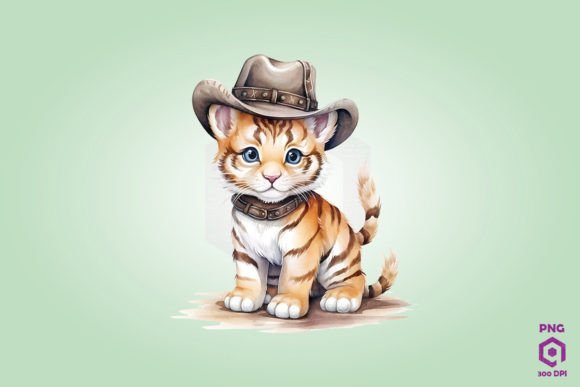
Bengal Tiger Wearing a Cowboy Hat
When I sit down to evaluate a new machine embroidery design, I am rarely looking for something that merely "looks cute." I am looking for viability. Can this design survive the hoop? Will it hold up after twenty washes? Does it translate well from a digital screen to a physical garment without losing its soul? Today, I am putting Bengal Tiger Wearing a Cowboy Hat under that same microscope. As an Illustrations and Graphics asset labeled as clipart or sublimation-ready PNG, it presents a unique challenge: how do we bridge the gap between a flat digital image and a textured, dimensional embroidered reality?
First Impressions and Visual Personality
The immediate draw of Bengal Tiger Wearing a Cowboy Hat is its inherent juxtaposition. We are used to seeing tigers in majestic, naturalistic settings, and we are used to cowboy hats in rugged, western contexts. Merging the two creates a playful, slightly ironic character that stands out in a sea of generic floral or animal motifs. The mood is lighthearted but bold. It screams personality.
From a designer’s perspective, the visual weight of this composition is significant. A tiger’s face requires strong definition to read correctly; if the details are too soft, it looks like a cat. If the hat obscures too much of the forehead or eyes, the expression is lost. In reviewing the source graphic, the layout suggests a central focus, which is excellent for standard placement on custom apparel. The contrast between the organic stripes of the Bengal tiger and the structured brim of the cowboy hat offers a nice textural variety that can be mimicked through stitch choices, provided the file is digitized with care.
Real-World Application: Where This Design Shines
I recently considered using this specific motif for a batch of holiday gifts for a client who runs a boutique farm shop. They wanted something that wasn’t your typical reindeer or snowman. Bengal Tiger Wearing a Cowboy Hat fit that bill perfectly. Here is how I see it performing in actual production scenarios:
- Apparel Decorators and Etsy Sellers: This design is ideal for unisex sweatshirts and heavyweight hoodies. The bold nature of the tiger translates well to the thick fabric of a crewneck. It works equally well on denim jackets, offering a cool, edgy vibe that appeals to younger demographics.
- Baby and Nursery Items: There is a surprising charm in applying this to baby onesies or burp cloths. When scaled down appropriately, the tiger becomes less intimidating and more whimsical. It serves as a standout piece for gender-neutral nursery decor or as a unique personalized gift for a child born in the Year of the Tiger.
- Accessories and Home Goods: I envision this working beautifully on canvas tote bags. The durability of the bag complements the sturdy look of the cowboy theme. It also has potential on kitchen towels or aprons, particularly for someone who enjoys barbecue culture or western-themed cooking. An embroidered patch version could be applied to baseball caps or beanies, adding a focal point to headwear.
The versatility here is high. Whether you are creating digital product previews for a print-on-demand store or crafting physical handmade products for craft fairs, this image has enough distinctiveness to grab attention in a crowded marketplace.
Technical Considerations and Stitch Execution
This is where the rubber meets the road. Since the source material is described as a PNG clipart, the transition to an embroidery file is critical. You cannot simply trace over a raster image and expect professional results. The digitizer must interpret the shapes.
For the tiger’s fur, a combination of fill stitch and perhaps some running stitch accents would help create depth. However, one must be wary of stitch density. A dense tiger face can become stiff and bulky. If placed on a delicate fabric, it may pucker. For the cowboy hat, a clean satin stitch outline followed by fill stitches inside the crown provides structure without excessive bulk.
Thread color selection is paramount. To make the orange and black stripes pop against a dark navy or black shirt, you need high-quality polyester threads with good sheen. On lighter fabrics, such as cream or light grey, the colors will appear softer, which might actually enhance the "cute" factor for baby items. Always test your thread palette before committing to a full run.
Where to Use Caution
No design is perfect for every surface. Bengal Tiger Wearing a Cowboy Hat has specific constraints that designers should respect:
- Small Hoop Sizes: If the original artwork includes intricate background elements or very fine lines in the hat stitching, scaling it down to fit a 4x4 inch hoop may result in muddy details. Small dots or thin lines may merge together during stitching.
- Textured and Stretchy Fabrics: Avoid placing this on highly textured fabrics like bouclé or loose-weave knits unless you use a heavy-duty stabilizer. The tension required to keep the tiger’s face stable might distort these fabrics. Similarly, on stretchy athletic wear, the rigid nature of a large embroidery block can restrict movement and cause cracking over time.
- Curved Surfaces: While great for flat panels, applying this to the curved front of a fitted cap requires careful hooping techniques. If the curvature is too extreme, the top of the hat or the tiger’s ears may not lay flat.
- Dense Stitch Areas: Be mindful of the area around the eyes and nose. Over-stitching these areas can obscure the facial expression, making the tiger look angry rather than cool. Less is often more when it comes to facial features in embroidery.
Practical Designer Notes for Success
Before you upload this to your shop or start stitching for a client, follow these steps to ensure a professional outcome:
- Test on Scrap Fabric: Never assume a design will work on your final fabric. Run a test on a scrap piece of the exact material you plan to use. Check for puckering, thread breaks, and color accuracy.
- Review Stitch Density: Zoom in on the digitized file. Are there any areas where the needle penetration is too close? Excessive density leads to breakage and difficult trimming.
- Check Contrast: View the design in black and white on your computer. If the distinction between the tiger’s stripes and the hat disappears in grayscale, it may lack clarity in monochrome thread combinations.
- Confirm Licensing: Since this is sold as a graphic asset, verify the commercial use rights. Some licenses allow for personal use only, while others permit selling finished goods. Ensure you have the right to sell commercial embroidery projects made from this design.
- Stabilizer Selection: Use a cut-away stabilizer for woven garments to prevent distortion over time. For knits, a tear-away may suffice for temporary stability, but cut-away is safer for longevity.
Final Verdict
Bengal Tiger Wearing a Cowboy Hat is more than just a novelty image; it is a versatile design asset with strong market appeal. It bridges the gap between wild animal aesthetics and rustic western charm. When executed with proper digitization techniques—mindful of density, stitch type, and fabric choice—it can elevate a simple tote bag design or a basic sweatshirt embroidery into a premium handmade product.
For the Etsy seller or small shop owner, this design offers a conversation starter. It is memorable, visually striking, and adaptable across various categories from holiday embroidery to everyday wear. Just remember that the success of the finished product lies in the preparation. Test thoroughly, choose your materials wisely, and let the bold personality of the tiger shine through the stitches.