Cowboy Firearm Embroidery Review
As a designer who spends more time than I care to admit staring at stitch charts and testing thread tensions, I approach every new machine embroidery design with a healthy dose of skepticism. The market is flooded with generic graphics that look great on screen but fall apart when transferred to fabric. That is exactly why I decided to put the Cowboy Firearm file through its paces. This isn’t just about whether it stitches; it is about whether it works as a viable asset for your craft business, your personal wardrobe, or a high-stakes client project.
The product listing categorizes this item under Logos and Graphics, which initially gave me pause. Usually, those categories imply flat vector art rather than intricate textile-ready patterns. However, upon reviewing the provided files—available in AI, EPS 10, PDF, SVG, PNG, and JPG—I realized this is a versatile digital embroidery file designed for maximum adaptability. My goal here is to break down how Cowboy Firearm performs in real-world scenarios, helping you decide if it deserves a spot in your library before you commit to buying or using it.
First Impressions: Mood and Visual Personality
When you first load Cowboy Firearm into your digitizing software, the immediate takeaway is its bold, unapologetic aesthetic. The design carries a rugged, Western vibe that feels authentic rather than cartoonish. Because it is vector-based and fully editable, the initial layout allows for significant customization. You can scale it up for a large back-print on a sweatshirt or shrink it down for a chest logo without losing critical integrity.
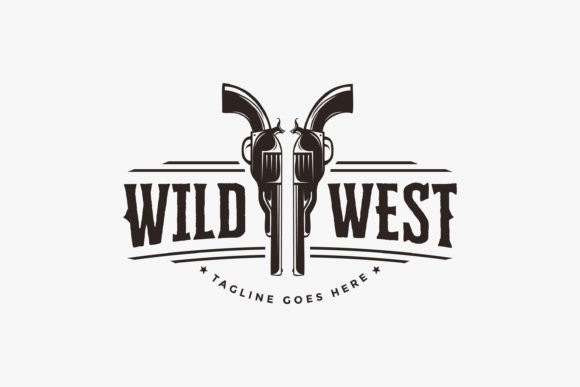
The visual personality of the design leans heavily into Americana and outlaw themes. It creates an instant mood of rebellion, heritage, and toughness. For designers targeting audiences interested in country culture, rodeo events, or vintage western wear, this design hits the right emotional notes. It does not feel like a clip-art afterthought; it feels like a statement piece. The clean lines suggest that the underlying digitization prioritizes clarity over excessive detail, which is a smart move for embroidery projects where too much complexity can lead to thread breaks or bulky seams.
Real-World Application: Where Does It Fit?
To truly evaluate a design, you have to imagine it on a finished product. Let’s walk through a few specific use cases for Cowboy Firearm.
Custom Apparel and Streetwear
This design shines on heavy cotton blends. Imagine a distressed black denim jacket featuring Cowboy Firearm embroidered on the back yoke. The contrast between the rugged texture of denim and the precise satin stitch outlines would create a premium, boutique-level finish. Similarly, on a heavyweight heather grey hoodie, the design could serve as a central graphic element. It works exceptionally well for custom apparel because the theme resonates with customers looking for unique, non-mass-produced fashion statements.
Tote Bags and Canvas Goods
For the Etsy seller or craft fair vendor, canvas tote bags are a staple. Cowboy Firearm translates beautifully onto natural jute or thick cotton canvas. The transparency of the PNG version (without text) allows you to place the graphic cleanly over any background color. Whether you are creating a gift set for a father’s day present or a branded bag for a local event, the design adds character without overwhelming the utility of the bag.
Patches and Accessories
One of the most lucrative niches for small businesses is embroidered patches. The vector nature of this file makes it easy to adjust the border for a standard patch size. A cowboy firearm motif on a leather-backed patch attached to a baseball cap or a backpack strap offers a tactile, three-dimensional appeal that printed graphics cannot match. It also works well on aprons for barbecue enthusiasts or kitchen towels for rustic-themed home decor.
Technical Performance and Stitching Considerations
No matter how good a design looks digitally, it must perform physically. Here is what you need to consider regarding the actual stitching process.
- Stitch Density and Clarity: The design appears to rely on solid fills and clean outlines. This is ideal for maintaining shape definition. However, always check the stitch density in your software. If the fill areas are too dense, the fabric may pucker, especially on lighter materials. If they are too sparse, the stabilizer might show through. Test a small section first to ensure the thread coverage is even.
- Thread Color Contrast: The success of this design hinges on color choice. On dark fabrics, light metallic or bright white threads will make the details pop. On light fabrics, deep navy, burgundy, or charcoal threads will provide the necessary depth. Avoid low-contrast combinations, such as beige thread on tan fabric, as the fine details of the firearm motif may get lost.
- Fabric Texture Compatibility: This design works best on stable, woven fabrics. While it can be attempted on knits, you must use a proper stabilizer to prevent shifting. Stretchy fabrics like jersey require extra caution; the rigid nature of some embroidery stitches might cause the garment to distort after washing.
Areas of Caution
While Cowboy Firearm is versatile, it is not a one-size-fits-all solution. There are specific situations where you should proceed with caution.
Avoid placing this design on extremely small hoop sizes unless you are confident in your machine’s ability to handle tight curves. Tiny lettering or intricate inner details might merge together if scaled down too far. Additionally, textured fabrics like terry cloth or boucle wool can obscure the design’s sharp edges, resulting in a muddy appearance. Curved surfaces, such as the front panel of a fitted cap, require careful hooping and possibly a curved-hoop attachment to ensure the design lays flat.
Furthermore, if you are producing items that require frequent industrial washing, such as workwear uniforms, ensure that the thread quality is high-grade polyester or rayon. Cotton thread may fray or fade quickly under harsh conditions, diminishing the professional look of the finished product.
Design Assets and Commercial Viability
For the commercial embroidery entrepreneur, the value of Cowboy Firearm lies in its editability. Being able to modify the vector source means you can tailor the design to fit specific brand guidelines. Perhaps you want to add a slogan underneath or change the angle of the grip. The availability of AI and EPS files gives you that control.
However, remember to verify licensing terms before selling finished goods. Even though the file is scalable, commercial rights vary by creator. Always confirm that you are permitted to sell physical products made from this design. If you plan to use it in printable mockups or digital previews, ensure that the PNG transparent background version is used correctly to maintain a clean presentation.
Final Verdict
Cowboy Firearm is a strong addition to any designer’s toolkit, particularly for those working in the western, rustic, or streetwear niches. It balances thematic impact with technical feasibility, making it suitable for everything from personalized gifts to high-volume shop merchandise. Its vector foundation ensures longevity and adaptability, while its bold aesthetic guarantees customer attention.
Before committing to a full production run, I strongly recommend testing the design on scrap fabric that matches your final material. Check the hoop size alignment, inspect the running stitch transitions, and evaluate the overall balance. If the test run holds up, you have a reliable asset that can elevate your handmade product line and build trust with buyers who appreciate quality craftsmanship.